Farmers
Vermicomposting for Farmers
🌱 Vermicomposting for Farmers – VermiVital Style
Turn your farm waste into farm strength – one worm at a time.
🚜 Why Should Farmers Care About Worms?
Simple: Healthy soil = healthy crops = higher yields.
And the richest, most microbe-packed soil builder you can get? Worm castings – aka black gold. It’s not a gimmick. It’s vermicomposting.
Let the worms do the dirty work, and you’ll reap the long-term rewards.
Capacity: 300kg per week / 1.2 Ton worth of soil value per month
Return of investment within 10 months
🌾 What is Vermicomposting?
“Vermi” means worms – nature’s little soil engineers. They take leftover organic matter from your farm (think veggie waste, fruit scraps, coffee grounds, etc.), and turn it into high-quality compost (humus) that:
-
Improves soil structure and aeration
-
Boosts water retention
-
Increases microbial activity
-
Delivers slow-release, balanced nutrients
-
Builds long-term soil fertility
This is closed-loop farming at its best – using what you already have, to feed what you grow.
🏗️ Setting Up on the Farm: What You’ll Need
To start producing your own vermicast, here’s what you’ll need:
-
A worm bin (CFT system preferred for farm-scale ops)
-
Bedding material (see below)
-
A steady stream of organic waste
-
Red Wiggler worms (Eisenia fetida)
-
A little bit of attention and routine
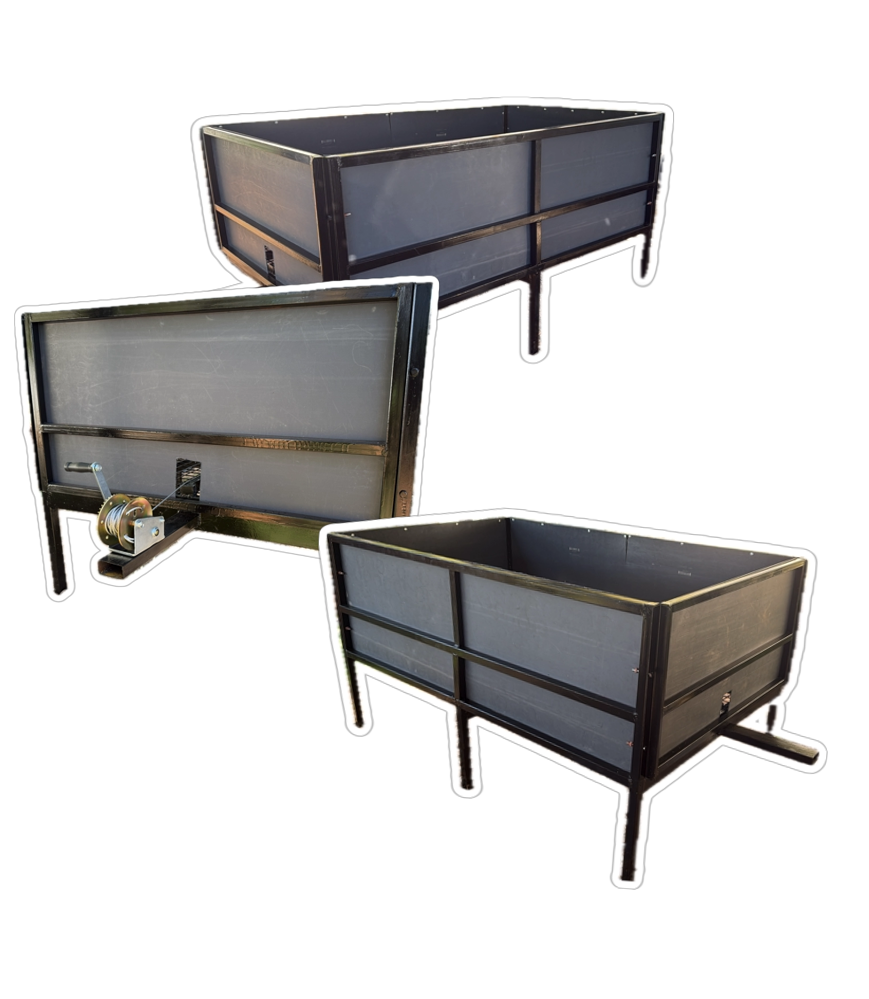
🏠 Worm Bins – Housing Your Compost Workforce
On a farm, scale matters – that’s why we recommend the Continuous Flow-Through (CFT) System. It’s a low-maintenance, high-output design where:
-
You feed from the top
-
Castings are harvested from the bottom
-
Worms always stay in their comfort zone near the surface
Build it yourself from wood and mesh or let VermiVital set you up. Just make sure:
✅ It’s shaded
✅ It drains well
✅ It’s well-ventilated
✅ It’s free of chemicals/antimicrobials
✅ It’s big enough to handle your expected organic waste
🛏️ Bedding – Give Them a Good Base
Worms thrive when their bedding feels like natural forest soil: soft, slightly damp, and full of life. Use a combo of:
-
Shredded brown cardboard
-
Coconut coir
-
Dry leaves or grass clippings (untreated)
-
Torn-up newspaper (plain, no colour)
Make sure the bedding:
🧪 Has a pH between 6.0 and 7.0
💧 Feels like a wrung-out sponge
💨 Has airflow – worms breathe through their skin
🍌 Feeding – What Goes In, Comes Out Better
Worms don’t eat fresh scraps right away – microbes need to soften it first. Then the worms move in and chow down. For best results:
✅ Chop scraps into small pieces
✅ Mix it into the top layer
✅ Keep it covered with bedding
Great inputs include:
-
Veggie scraps
-
Fruit peels
-
Coffee grounds
-
Tea bags (no staples)
-
Old bread and grains
-
Crop leftovers (non-acidic, untreated)
-
Animal Manure
-
Grass
Avoid:
❌ Citrus
❌ Meat & dairy
❌ Salty or spicy leftovers
❌ Glossy/bleached paper
❌ Chemically treated grass or hay
Bad inputs can ruin the pH and bring pests. Keep it clean, plant-based, and local.
🐛 The Real MVPs – Red Wigglers (Eisenia fetida)
These are the champions of compost:
-
Surface dwellers = perfect for CFT systems
-
Double population every 90 days
-
Fast eaters and high castings producers
-
Resilient in SA climates
Start with a solid batch – and soon, you’ll have a thriving population converting waste into soil magic.
💪 Benefits of On-Farm Vermicomposting
🧬 Improve soil biodiversity
🌾 Enhance crop yields naturally
💧 Reduce watering needs
🚜 Cut input costs on fertiliser
🔄 Reuse farm waste instead of burning or dumping it
♻️ Build long-term organic soil fertility
🧠 Closing Thoughts – Soil Health is Wealth
You’re not just composting. You’re regenerating your land. You’re creating living soil that feeds your crops, retains water, resists pests, and grows stronger with every cycle.
Let VermiVital help you close the loop on your farm with a customised vermicomposting system built for your context.
This is farming with purpose. This is farming with nature.
🌿 Ready to Start Your Own VermiVital Worm Composting System?
Let’s build your on-farm vermicast powerhouse today.